
Hurricane season brings more than just wind and rain concerns for Florida homeowners. Power outages, flooding, flying debris, and sudden storm surges can all take a toll on an AC system that isn’t properly prepared, often in ways that aren’t obvious until well after the storm has passed. A little planning before the season ramps up can mean the difference between a quick recovery after a storm and weeks without reliable cooling in the middle of Florida’s hottest, most humid months. Below, we’ll walk through how to prepare your AC system before hurricane season, what to do as a storm approaches, and how to safely get things back up and running once it passes, whether you’re a homeowner or managing a commercial property.
Why Hurricane Season Puts Extra Strain on Your AC System
Hurricane season in Florida typically runs from June through November, overlapping almost entirely with the months when air conditioning is working its hardest to keep homes comfortable. That combination means a storm-related disruption often hits at the worst possible time, when the system is needed most and temperatures and humidity are at their peak, with little relief until repairs or power are restored.
High winds can damage or dislodge the outdoor condenser unit, while heavy rain and flooding pose a real risk to the electrical components housed outside. Power surges during and after storms, particularly when utility power comes back online unevenly across a neighborhood, can also damage sensitive parts of the system if it isn’t protected ahead of time. Even a storm that causes no direct visible damage to the home can leave an unprotected AC system vulnerable to issues that don’t show up until days or weeks later, once the unit has been running under stress.
Preparing ahead of time reduces the chances of storm-related damage and helps ensure that if the power goes out, restarting the system afterward is straightforward rather than complicated by preventable issues that could have been caught with a simple inspection beforehand.
Pre-Season AC Inspection Checklist
Before hurricane season begins, it’s worth having the system professionally inspected and addressing any existing issues that a storm could make significantly worse. A few areas deserve particular attention during this kind of pre-season checkup, and most of them take only a short amount of time to review thoroughly.
- Check that the outdoor unit is securely anchored to its pad
- Trim back trees, palms, or shrubs near the unit that could drop debris
- Inspect the electrical disconnect box for corrosion or looseness
- Confirm the unit is elevated above typical flood levels for the property
- Replace air filters so the system starts clean after any downtime
- Address any existing refrigerant, wiring, or performance issues in advance
A seasonal AC maintenance visit is one of the most effective ways to catch small problems before they turn into storm-related emergencies, since a technician can spot early warning signs that aren’t obvious during everyday use. Our post on when to schedule AC maintenance outlines a good general timeline, and scheduling a checkup before hurricane season begins is one of the most useful times to do it each year, both for peace of mind and for the system’s long-term reliability.
Protecting Your Outdoor Unit Before a Storm
Once a storm is in the forecast, there are a few additional steps worth taking to protect the outdoor equipment specifically, beyond the general seasonal prep already in place, and these are worth revisiting each time a storm watch is issued.
Securing and Anchoring
Confirm that hurricane straps or anchoring hardware are intact and that the unit hasn’t shifted on its pad over time. A unit that isn’t properly secured is far more likely to be damaged by high winds or debris impact during a major storm, and this is a quick check that’s easy to overlook until it’s too late, particularly on units that have been in place for several years without a close inspection.
Flood and Debris Risk
If flooding is a realistic possibility at the property, consider what steps can reasonably be taken to protect the unit, such as clearing nearby drainage paths so water doesn’t pool directly around the equipment during heavy rainfall. Loose outdoor items that could become airborne, including patio furniture, planters, or grills, should be secured or brought inside well ahead of the storm rather than at the last minute.
Power Surge Protection
A whole-home or unit-specific surge protector can help shield the system’s electrical components from the power fluctuations that often occur during storms and when utility power is restored across the area. This is a relatively small investment upfront that can prevent a far more costly repair after a major weather event, and it’s worth discussing with a technician if the home doesn’t already have one installed, especially for properties that have experienced surge-related damage in the past.
What to Do During and After a Storm
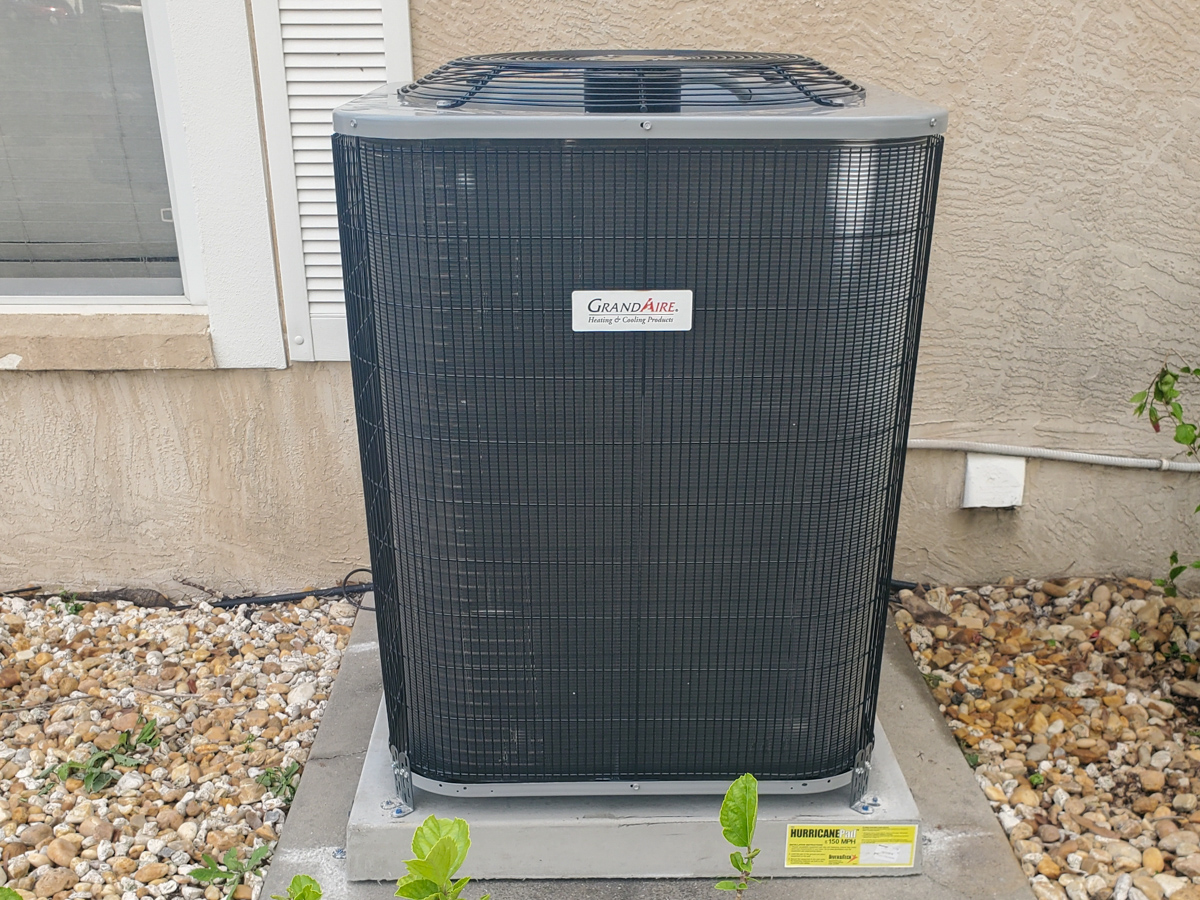
If possible, turn the AC system off before a storm makes landfall, particularly if a power outage seems likely in the area. This helps protect the compressor from being caught mid-cycle during a sudden loss of power and reduces the risk of damage when power is restored unevenly across the grid in the hours or days that follow.
After the storm passes, resist the urge to immediately power the system back on, especially if there’s any standing water near the outdoor unit or visible damage to the equipment itself. A quick visual inspection for debris, water intrusion, or physical damage can help avoid turning on a system that isn’t safe to run, which could cause further, more expensive damage. If anything looks questionable, or if the home has gone without cooling for an extended period in the heat that often follows a storm, our emergency AC repair team is available to inspect the system and get it running safely again. We covered more on handling urgent post-storm situations in our guide to rapid emergency AC solutions, including what to expect when reaching out for after-hours help.
Why Southwest Florida Homes Need a Storm-Ready Cooling Plan
Homes throughout Sarasota, Bradenton, and Venice face a longer, more active hurricane season than much of the country, along with the coastal exposure that comes with living near the Gulf. That combination makes storm preparation for cooling equipment more than just an afterthought, particularly for households or businesses that rely on consistent indoor temperatures for comfort or day-to-day operations throughout the warmer months.
Homeowners in Sarasota, Bradenton, and Venice all deal with similar seasonal risks, even though specific flood zones and wind exposure can vary by neighborhood and proximity to the coast. Businesses in particular should factor storm readiness into their commercial AC service planning, since downtime affects staff, customers, and day-to-day operations in ways that go beyond simple comfort and can carry a real financial cost. A system that’s already older or has been showing signs of wear is also worth evaluating for replacement before hurricane season, rather than hoping it holds up through another year of storms and heavy seasonal use.
Staying Comfortable If Cooling Is Down After a Storm
Even with the best preparation, a major storm can sometimes leave a home without power or working AC for a period of time. Having a short-term plan in place can make that stretch more manageable while repairs or power restoration are underway, and it can also reduce the temptation to run equipment in ways that could cause damage or safety issues.
- Keep blinds and curtains closed during the day to limit heat gain
- Use battery or generator-powered fans to keep air moving
- Identify the coolest room in the home to spend time in if needed
- Have a plan for pets or family members who are especially heat sensitive
- Know which local resources, such as cooling centers, may be available in an extended outage
If a generator is part of the household’s storm plan, it’s worth confirming ahead of time whether it has enough capacity to safely run the AC system, since attempting to power a full-sized unit on an undersized generator can cause its own set of problems. For residential customers, having a trusted service provider to call as soon as it’s safe to do so can significantly shorten the time spent without cooling. Storms are unpredictable, but the response to them doesn’t have to be, especially when a plan is already in place before the season starts.
Hurricane Season AC Checklist
Use this quick checklist as hurricane season approaches each year, and again whenever a storm is specifically forecast for the area:
- Professional inspection completed before peak season
- Outdoor unit anchored, elevated, and clear of debris
- Surge protection in place for the system’s electrical components
- System powered down ahead of a storm, if possible
- Visual inspection completed before restarting after a storm
- Emergency service contact saved in case repairs are needed
Working through this list each year, and again whenever a storm is approaching, helps reduce the chances of a major disruption and makes recovery faster if damage does occur. It’s a small amount of preparation that can prevent a much longer, more uncomfortable, and more expensive recovery process later.
Get Storm-Ready Before the Next Forecast
Preparing your AC system for hurricane season doesn’t have to be complicated, but it does need to happen before a storm is already on the way rather than after one has already been named. Our team can inspect your system, address any existing issues, and help make sure your home or business is ready to handle whatever the season brings, from the first named storm through the last. Schedule a Free Estimate today and let us help you build a storm-ready cooling plan before the next system develops in the Gulf.
Ready for an expert opinion? Get in touch today!
Explore HVAC guides, seasonal AC tips, and home cooling advice from Keepin You Kool, Sarasota’s trusted hometown AC experts.
Like this article? Spread the word!
Related Posts

Keepin You Kool: When Sarasota, FL Homeowners Should Schedule AC Maintenance
Discover when Sarasota, FL homeowners should schedule AC maintenance to avoid breakdowns…

Why Bradenton Businesses Trust Keepin You Kool for Expert Commercial AC Installation & Maintenance
Bradenton businesses trust Keepin You Kool for expert commercial AC installation and…

Keepin You Kool: Your Ultimate Fall Comfort Partner in Bradenton, Sarasota, and Venice
Discover Keepin You Kool, your premier HVAC experts in Bradenton, Sarasota, and Venice,…